


How to Choose the Right Bracelet for Your Wrist Size: The Ultimate Professional Guide
How to Choose the Right Bracelet for Your Wrist Size? Use our exact guide to find your fit. Explore our non-tarnish stainless steel collection now!

Table of Contents
- The Invisible Struggle of Finding the Perfect Fit
- Understanding the Math Behind Bracelet Sizing
- Chain vs. Bangle: Why Structure Changes Everything
- The Science of 316L Stainless Steel Safety
- Proportional Fit and Visual Weight
- Matching Bracelet Style to Your Daily Routine
- Frequently Asked Questions for the Perfect Fit
Actually, many people struggle to find a bracelet that feels just right. You might find a design you love online. However, it often arrives feeling too tight or loose. Consequently, you need a system to ensure a perfect fit every time. Learning how to choose the right bracelet for your wrist size? saves time and money. Because the right fit prevents skin irritation and lost jewelry. Furthermore, it ensures your accessories look intentional and polished. Instead of guessing, you can use technical measurements to guarantee comfort. Actually, a well-fitted bracelet should feel like a natural extension of your arm. Because your wrist shape changes with movement, flexibility is key.
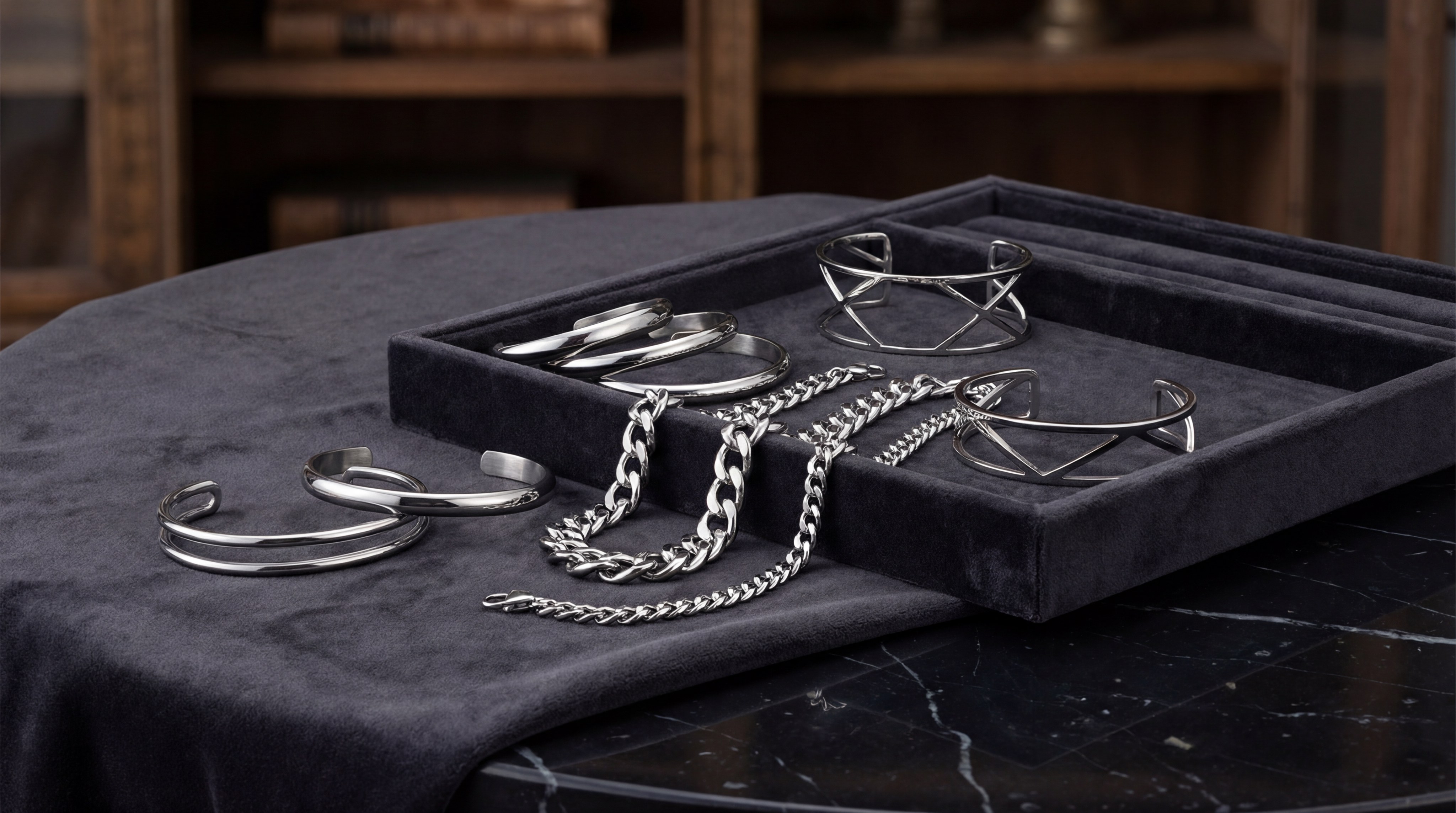
The Invisible Struggle of Finding the Perfect Fit
Finding a comfortable fit is often harder than it looks. Actually, your wrist shape changes throughout the day. Because your tendons move, a static measurement isn’t always enough. Furthermore, the material of your jewelry plays a major role. Instead of soft metals, professional designers often use 316L stainless steel. This metal is very strong and holds its shape well. However, its rigidity means your initial measurement must be precise. Actually, 316L is known as surgical steel because it is so pure. Because it lacks high nickel content, it is safe for everyone.
To measure at home, you can use a flexible tape. Wrap it around the area just below your wrist bone. Consequently, you will see your exact circumference. Actually, you can use a piece of string if you lack a tape. Mark the string where the ends meet. Furthermore, lay it flat against a ruler to get the number. Instead of wrapping it tightly, keep the tape flush against the skin. Because even a few millimeters matter, accuracy is your best friend. Consequently, you will avoid the frustration of returns and exchanges. Actually, most professional guides suggest measuring both wrists. Because your dominant hand is often slightly larger, you need to know the difference.
Understanding the Math Behind Bracelet Sizing
Actually, every jewelry manufacturer uses slightly different charts. One brand’s “Small” might be another’s “Medium.” Consequently, you should never rely on labels alone. Instead, create a personal size profile using inches and centimeters. Furthermore, check if a brand includes the clasp in their total length. Because a thick clasp can take up significant space on your wrist. Actually, the “Two-Finger Rule” remains the best way to ensure a professional fit regardless of your wrist size. Because wrists swell slightly throughout the day due to heat or movement, you need that extra bit of internal slack. However, you must avoid too much dangling, which can lead to the bracelet catching on furniture or clothing.
To test your fit, use the “two-finger” rule. Actually, you should slide two fingers under the bracelet easily. However, the bracelet should not slide past your palm. Consequently, this gap provides room for movement and comfort. Instead of a tight band, you want a gentle drape. Furthermore, consider the thickness of the metal links. Because thicker links reduce the internal diameter, you might need a larger size. Actually, a 10mm wide bracelet feels tighter than a 2mm chain of the same length.
Bracelet Fit Comparison Guide
| Fit Style | Extra Length | Movement | Best Style | |
|---|---|---|---|---|
| Standard | + 0.5″ | Moderate | Link Chain | |
| Comfort | + 0.75″ | High | Charm | |
| Loose | + 1.0″ | Maximum | Heavy Cuff |
Chain vs. Bangle: Why Structure Changes Everything
Actually, two bracelets with the same length will fit differently. A flexible chain drapes against your skin. However, a rigid bangle holds a fixed circle. Because chains are flexible, they are more forgiving for varied bone structures. Furthermore, stainless steel designs highlight this difference clearly. Instead of bending, 316L steel remains stiff and professional. Actually, bangles require you to measure the widest part of your hand. Because the jewelry must pass over your knuckles, the wrist size alone is not enough. Consequently, many people find bangles more difficult to size correctly.
Choose your style based on your wrist bone prominence. Actually, delicate chains suit smaller frames best. Consequently, larger bone structures look better with bold, rigid pieces. Furthermore, check out this jewelry guide for more styling ideas. You can also read more about the history of the bracelet online. Instead of forcing a fit, look for adjustable “C” shaped cuffs. Actually, these allow for minor manual adjustments. Because you can gently squeeze the ends, you get a custom fit every time. Consequently, cuffs are the most versatile choice for gifting.
The Science of 316L Stainless Steel Safety
Actually, we see many clients struggling with skin irritation from lower-grade alloys that contain hidden nickel. Because 316L stainless steel contains molybdenum, it resists the corrosive effects of sweat and saltwater significantly better than standard fashion metals. Furthermore, the medical industry relies on this “surgical grade” steel for implants, which proves its safety for your sensitive skin. However, beauty isn’t sacrificed for safety in our workshop. Instead of traditional electroplating, we utilize PVD (Physical Vapor Deposition) coating to achieve our gold and rose gold finishes. Consequently, the color bonds at a molecular level, staying vibrant and tarnish-free for years of daily wear.
Because the metal is exceptionally hard, it resists the scratches and dents that often ruin softer silver or gold pieces. Actually, our laboratory testing shows that 316L maintains its structural integrity under pressures that would easily bend or snap sterling silver. Furthermore, the industrial-chic aesthetic of steel fits the modern 2026 wardrobe perfectly. Instead of worrying about a dull finish, you spend your time enjoying the piece’s permanent luster. Consequently, professional jewelers and high-end brands prefer this material for high-traffic accessories like bracelets. Because we manufacture these pieces directly in our factory, we control every single step of the refining process.
Actually, the DG Jewelry collection offers a massive range of 316L stainless steel pieces designed for longevity and style. We focus on providing high-quality, non-tarnish, and hypoallergenic jewelry that meets the rigorous demands of modern consumers and wholesale brands alike. Whether you need minimalist cuffs or industrial-strength chains, our inventory features over 5,000 styles ready for immediate global shipping.
Explore the full Stainless Steel Jewelry Collection here and upgrade your inventory today!
Proportional Fit and Visual Weight
Actually, I often notice people wearing bracelets that simply look out of proportion because they ignored their body’s natural scale. Because your wrist size dictates the visual weight you can carry, you should choose a width that complements your physical frame. However, small wrists under six inches often look best with minimalist, low-profile designs. Instead of a 15mm heavy curb chain, try a 3mm to 5mm thin cuff or a delicate cable chain. Furthermore, stacking several thin pieces creates a bold, curated look without overwhelming your arm. Consequently, the jewelry enhances your delicate features rather than hiding them under a heavy mass of metal.
Actually, large wrists over seven inches have the opposite requirement to look balanced. Because a thin chain can look like a fragile thread on a muscular frame, we recommend starting with substantial pieces. Instead, look for bracelets starting at 10mm in width to match your arm’s presence. Furthermore, industrial styles with thick, interlocking links provide the necessary visual anchor for a larger frame. Consequently, the accessory looks intentional, powerful, and proportional. Actually, the placement of the wrist bone serves as your primary anchor point. Because wearing the bracelet too high on the forearm can look awkward, always aim for the area just below the bone.
Proportional Fit Guide
| Wrist Scale | Width (mm) | Recommended Style | |
|---|---|---|---|
| 🤏 Small | 2mm – 5mm | ✨ Thin cuffs | |
| ✋ Medium | 6mm – 10mm | ✅ Standard links | |
| 💪 Large | 10mm+ | ⛓️ Heavy curb |

Matching Bracelet Style to Your Daily Routine
Actually, your daily routine should dictate the closure type and flexibility of your bracelet as much as your wrist size does. Because we lead fast-paced lives, our jewelry must survive everything from morning coffee spills to high-intensity gym sessions. However, a clanking, loose bangle might prove highly distracting in a quiet office or a library environment. Instead, professional settings benefit from low-profile, snug-fitting link bracelets or minimalist cuffs. Furthermore, the smooth, polished surface of 316L steel ensures your sleeves won’t snag or tear during a busy workday. Consequently, you maintain a polished, professional appearance without the physical nuisance of a moving accessory.
Actually, the gym provides the ultimate durability test for any modern accessory. Because sweat contains high concentrations of salts and oils, it quickly tarnishes and ruins most cheaply plated jewelry. However, our 316L surgical steel pieces are essentially sweat-proof and corrosion-resistant. Instead of removing your jewelry before every workout, you can wear it with total confidence. Furthermore, the hypoallergenic nature of our steel prevents that itchy “jewelry rash” during intense physical activity. Consequently, you stay stylish and accessorized even at your peak performance levels. Actually, social settings allow for much more experimental layering and bold statements. Because you might transition from a work meeting to a dinner date, we suggest choosing “day-to-night” versatile pieces.

Frequently Asked Questions for the Perfect Fit
Can I resize a stainless steel bracelet at home?
Actually, many people find it difficult to resize stainless steel because the metal is incredibly hard and durable. Because 316L steel does not bend easily, you cannot simply pull the links apart with your bare hands. Instead, you need a specialized link removal tool or a professional jeweler to push out the pins safely. Consequently, attempting to use household pliers often results in permanent scratches on the polished surface. Actually, purchasing a small watch repair kit is the most cost-effective way to handle this yourself. Furthermore, always work on a soft cloth to protect the metal finish.
Expert Tip: Look for small arrows engraved on the inside of the links to identify the correct direction for pin removal.
What is the difference between wrist diameter and circumference?
Actually, confusing these two terms is the most common reason for ordering the wrong jewelry size. Because circumference measures the total distance around your wrist skin, it is the number you need for flexible chains. However, diameter measures the straight-line distance across the widest part of your wrist or hand. Instead of using a flat ruler across your arm, always use a soft tape to get the circumference. Furthermore, diameter is mainly used by manufacturers to size rigid bangles that don’t open. Consequently, you should always check which measurement the size chart is referring to before buying.
Expert Tip: If you only have a diameter measurement, multiply it by 3.14 to estimate the necessary circumference.
What should I do if my measurement is between sizes?
Actually, finding yourself between a 7-inch and 7.5-inch size can feel like a major styling challenge. Because your wrist size changes slightly with the weather and salt intake, a tight fit can become painful. Instead of choosing the smaller size and hoping it stretches, you should always size up for comfort. Furthermore, a slightly loose bracelet allows for better skin breathability and movement. Consequently, you can add a small decorative extender chain if the piece feels too large. Actually, larger link bracelets are easier to customize than solid cuffs.
Expert Tip: Choose the larger size if the bracelet band is wider than 8mm, as thick bands feel tighter on the skin.
How can I tell if a bracelet clasp is secure?
Actually, losing a favorite piece of jewelry due to a weak clasp is a frustrating experience. Because modern 316L steel is heavy, it requires a high-tension spring mechanism to stay closed. However, some fashion jewelry uses cheap alloy clasps that lose their grip over time. Instead, look for lobster claws or fold-over buckles that provide a firm “click” when closed. Furthermore, test the security by gently tugging on the bracelet while it is on your wrist. Consequently, you will feel confident that the piece will stay in place during your daily activities.
Expert Tip: Periodically clean your clasp with a soft brush to remove dust that can jam the internal spring.